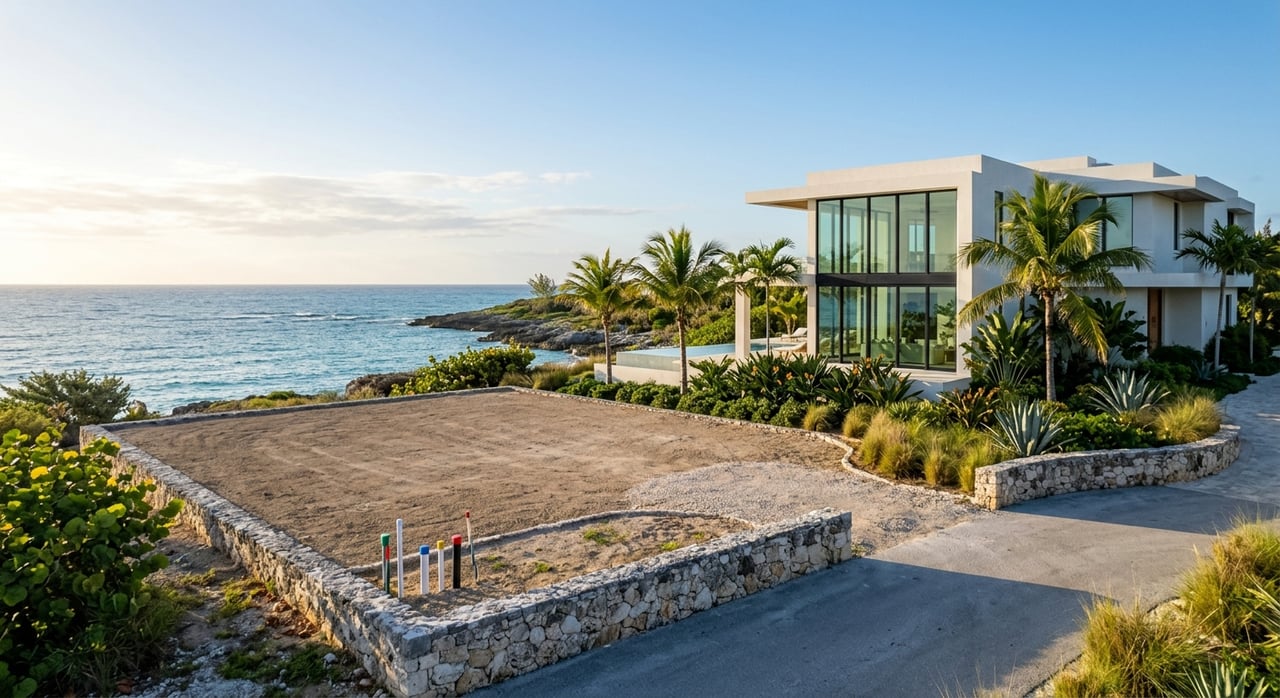
If you are thinking about buying land in Cabo Rojo, it is easy to fall in love with the vision before you verify the lot. A parcel that looks perfect online or from the road may come with zoning limits, coastal restrictions, access issues, or utility challenges that change your plans. The good news is that with the right due diligence, you can move forward with much more confidence. Let’s dive in.
Why Cabo Rojo land needs careful review
Cabo Rojo offers a wide mix of land, from inland parcels to lots closer to the coast. That variety is part of the appeal, but it also means the rules and development potential can change significantly from one property to the next.
In Miradero and other areas of Cabo Rojo, you should verify the exact parcel record and cadastral number instead of relying only on a neighborhood name. Municipal and coastal planning materials place strong emphasis on sustainable development, environmental protection, and parcel-specific review.
Start with zoning and land use
Before you think about design, budget, or build timeline, confirm what the lot is actually allowed to be used for. Puerto Rico’s land-use framework classifies land into categories such as urban, urbanizable, and rustic, with some protected subcategories.
For parcel-level review, the key tools are the Planning Board’s Catálogo Interactivo de Calificación and MIPR. These resources can show zoning, planning instruments, physical and environmental features, and nearby permits that may affect your decision.
Cabo Rojo’s territorial planning also highlights natural-resource protection and sustainable development. That means you should not assume every vacant lot is ready for construction, especially in rural or coastal areas.
Why coastal parcels require extra caution
If the lot is near the shoreline, the review should go deeper. DRNA’s coastal planning materials for Cabo Rojo identify reefs, lagoons, wetlands, beaches, cliffs, mangroves, and salitrales as important resources that may affect what is possible on or near a parcel.
If a property may involve the zona marítimo-terrestre, you should also confirm whether a DRNA-certified deslinde is part of the picture. This is one of the biggest reasons coastal land should never be evaluated by appearance alone.
Check topography, flood risk, and site conditions
A lot may look open and usable at first glance, but shape, elevation, slope, drainage, and erosion concerns can all affect buildability. In Cabo Rojo, these site conditions can vary sharply even between nearby parcels.
MIPR is designed to help evaluate the environmental and physical characteristics of a site. For flood review, Puerto Rico’s flood portal states that ABFE maps are the preferred reference for new construction or substantial improvements.
In practical terms, you should look closely at:
- Slope and elevation
- Runoff and drainage patterns
- Flood-zone status
- Signs of fill or erosion concerns
- Coastal exposure, if applicable
These factors can affect cost, permit strategy, and whether your building plans are realistic for the parcel.
Confirm legal access early
Access is one of the most overlooked parts of buying land. A parcel may seem easy to reach, but you still need to confirm legal road access and any relevant easements before closing.
MIPR can help identify neighboring parcels and nearby permits, which may reveal potential access issues, encroachments, or surrounding uses you need to understand. It is much better to discover these items early than after you already own the land.
Verify title, boundaries, and recorded issues
Vacant land usually requires more due diligence than buying an existing home. With a house, some questions are already answered by the structure and prior utility setup. With land, you are often starting from scratch.
You should verify title, boundary lines, legal access, utility availability, and permitted use before you assume the property is ready for construction. In Puerto Rico, the Registry of Property is the government source for ownership, recorded transactions, and encumbrances.
Why a licensed survey matters
A licensed agrimensor is especially important when buying land. Puerto Rico regulates the surveying profession, and proper authorization and active registration are required to practice.
The survey helps confirm the lot’s exact perimeter, area, and whether there may be overlap with neighboring land or public areas. If there is any uncertainty about what you are really buying, the survey is one of the most important tools in the process.
Understand taxes and closing steps
Land closings in Puerto Rico can be more document-heavy than many buyers expect. The deed is handled by a lawyer-notary, and Hacienda states that the notary must be an attorney admitted to practice law and notary work in Puerto Rico.
Hacienda also states that the notary must file the informative real-estate transfer form electronically by the 10th day of the following month, with penalties for late filing. That is one reason it helps to work with local professionals who understand the workflow.
You should also verify unpaid property taxes and other debts with the seller and CRIM before closing. Hacienda specifically notes that this responsibility falls on the buyer, and real property in Puerto Rico is subject to property tax collected by CRIM.
Plan utilities before you close
If your goal is to build, utility planning should happen before closing, not after. A lot can seem attractive on paper but still present challenges for water or electrical service.
OGPe states that to connect water, electricity, or another service that requires a permit, you first need to determine whether the use is residential or non-residential. Non-residential uses require a Permiso Único, while residential uses require a Permiso de Uso Residencial.
For water service, AAA’s Mi Acueductos portal is the official place to manage requests and check status. For power, Puerto Rico’s energy agency notes that LUMA began operating the grid in 2021, which is a reminder to confirm electric-service availability and interconnection directly for each site rather than making assumptions.
Expect longer timelines than a home purchase
Buying land often takes longer than buying an existing home because there are more unknowns to verify. Depending on the parcel, you may need zoning confirmation, title cleanup, survey work, flood review, coastal review, utility verification, and permit-related follow-up before the lot is truly ready for your next step.
If the land needs to be segregated, grouped, or otherwise reconfigured, you should also expect more time for municipal and Hacienda filings. OGPe has a dedicated process for land segmentation, and related notarial filings may also apply.
Budget for more than the purchase price
When you buy land, the price of the parcel is only part of the financial picture. Your due diligence may uncover additional costs that are essential to making the property usable for your goals.
You should budget for items such as:
- Surveyor fees
- Attorney-notary fees
- Registry and recording costs
- Permit fees
- Utility-connection costs
- Site-specific studies, such as drainage, soil, or environmental review
The exact amount depends on the parcel and what your due diligence reveals. Lots that seem similar at first can have very different total costs once the details are confirmed.
Build the right local team
For land in Cabo Rojo, your core professional team will often include a local attorney-notary and a licensed agrimensor. If the parcel is coastal, flood-prone, or otherwise unusual, you may also need input related to DRNA or permitting.
This is where local guidance can make a real difference. A strategic, detail-focused approach can help you identify red flags early, ask better questions, and avoid costly assumptions.
Smart questions to ask before buying land
If you are comparing parcels in Miradero or elsewhere in Cabo Rojo, keep these questions at the center of your review:
- What is the exact cadastral number and parcel record?
- How is the land classified, and what uses are allowed?
- Are there coastal, environmental, or flood-related restrictions?
- Is legal road access clearly documented?
- Has a licensed survey confirmed boundaries and area?
- Are utilities available, and what permits may be required?
- Are there unpaid property taxes, encumbrances, or title issues?
- Does the lot need segregation or another reconfiguration process?
Clear answers to these questions can save you time, money, and frustration later.
Buying land in Cabo Rojo can be an exciting move, whether you are planning a future home, a second property, or an investment. The key is to treat every parcel as its own case, especially in a market where coastal conditions, planning rules, and infrastructure can vary so much from lot to lot. If you want a local, detail-oriented approach to evaluating land opportunities in Puerto Rico, Desiree Lopez can help you move forward with clarity and confidence.
FAQs
What should you verify first when buying land in Cabo Rojo?
- You should first verify the exact cadastral number, parcel record, zoning, and land-use classification rather than relying only on the area name or listing description.
Why is zoning important for a vacant lot in Cabo Rojo?
- Zoning and land-use tools help show what may be allowed on the parcel, along with planning instruments, environmental features, and nearby permits that could affect your plans.
What makes coastal land in Cabo Rojo more complex?
- Coastal parcels may involve added review for sensitive natural resources and, in some cases, a DRNA-certified deslinde related to the zona marítimo-terrestre.
Do you need a survey when buying land in Miradero or Cabo Rojo?
- A licensed agrimensor is important because the survey confirms the lot’s perimeter, area, and any possible overlap with neighboring land or public areas.
How do utilities work when buying vacant land in Puerto Rico?
- You should confirm utility availability before closing, and permit requirements can depend on whether the intended use is residential or non-residential.
Who handles a land closing in Puerto Rico?
- The deed is handled by a lawyer-notary in Puerto Rico, and the transaction includes required filings through the local closing and registry process.
Should you check property taxes before closing on land in Cabo Rojo?
- Yes, buyers should verify unpaid property taxes and other debts with the seller and CRIM before closing because this responsibility falls on the buyer.
Why can buying land take longer than buying a house in Cabo Rojo?
- Land purchases often involve extra steps such as zoning confirmation, survey work, flood review, title review, utility verification, and possible permit or segmentation actions.